
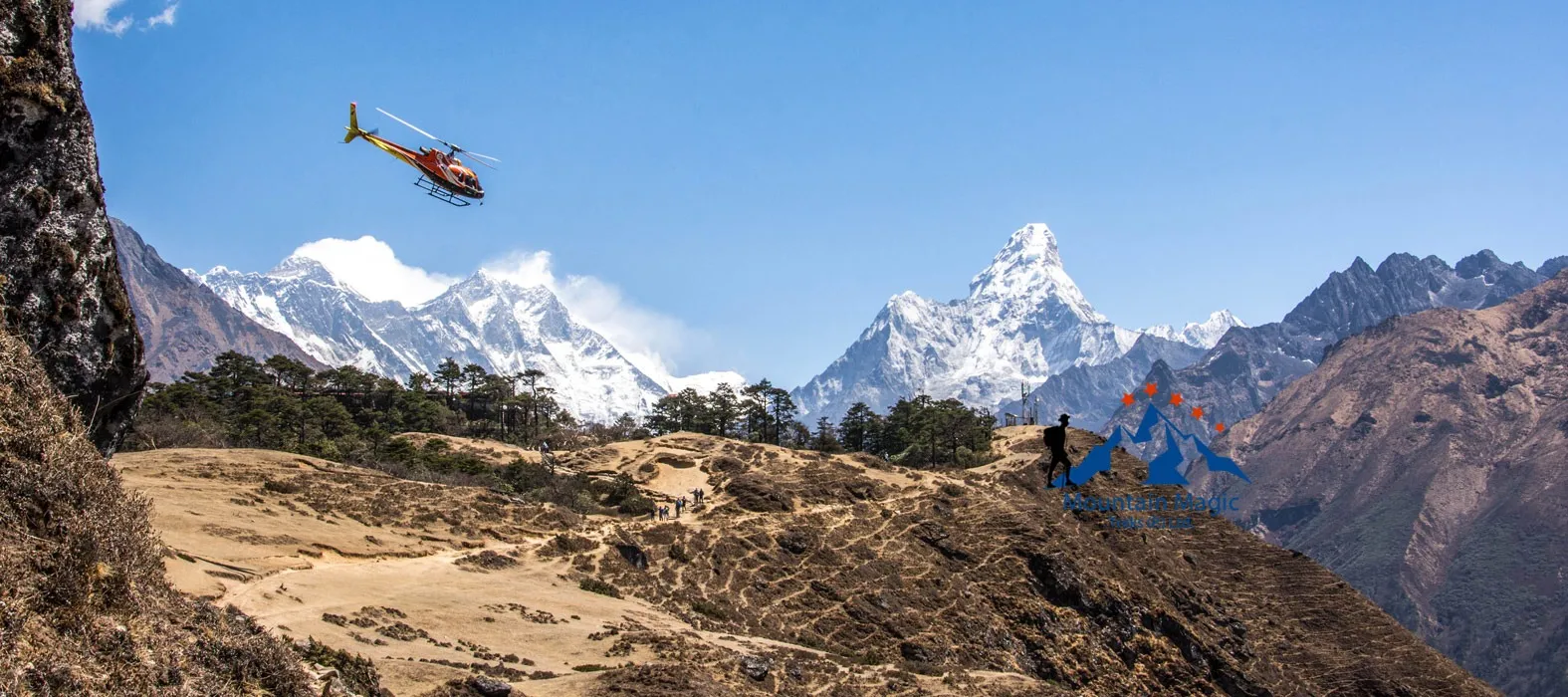
Some of the best parts of a mountain journey are not written into the itinerary.
A sunrise seen between two peaks. A quiet trail after leaving a busy village. The sound of a river below a suspension bridge. A cup of tea after a long climb.
The Everest Base Camp Trek With Helicopter Return gives travelers many chances to experience these simple moments while walking through the Khumbu region. The listed itinerary takes 10 days and includes acclimatization in Namche Bazaar and Dingboche before reaching Everest Base Camp and Kala Patthar.
The helicopter return then adds one final experience: seeing the mountains from above.
The Journey Starts Before the High Mountains
The adventure begins in Kathmandu before moving toward Lukla by helicopter.
The flight itself offers early views of the Himalayan landscape. Once you reach Lukla, the pace changes completely.
Walking Makes the Distance Feel Real
From Lukla, the route continues toward Phakding.
The trail passes green hills, local settlements, monasteries, and sections of the Dudh Koshi River. The first walking day is relatively short, giving you time to settle into the rhythm of the trek.
Do not rush through these early sections.
The lower Khumbu is part of the experience, not just a road to the higher mountains.
Namche Is More Than a Stopover
The trail from Phakding to Namche Bazaar takes around six to seven hours according to the listed itinerary.
The route follows the Dudh Koshi and includes a major climb toward Namche.
Give Your Body Time
Namche is where the trip starts to feel more serious.
The itinerary includes an acclimatization day here. You can use it for a short hike, explore nearby villages, or simply rest.
This is not wasted time.
Your body needs time to adjust before you continue higher.
A short walk with a return to Namche can be more useful than spending the entire day pushing yourself.
Tengboche Changes the Mood
After Namche, the trail continues toward Tengboche.
The village is known for its Buddhist monastery and wide mountain views.
Look Beyond Everest
The temptation is to keep searching for Everest.
Instead, notice the entire landscape.
Ama Dablam, forests, prayer flags, valleys, and local settlements all add something to the journey.
The monastery also offers a chance to see an important part of Sherpa culture.
Travel becomes more meaningful when you pay attention to the people and traditions around you, not only the mountains.
Dingboche Is a Test of Patience
The trail eventually reaches Dingboche at around 4,410 meters.
By this point, the air is noticeably thinner and the landscape is becoming more open.
Slow Down Without Feeling Guilty
You may find yourself walking more slowly than expected.
That is normal.
Do not turn your pace into a measure of fitness.
The itinerary includes another acclimatization day at Dingboche. A short hike toward Nangkartshang Peak is one option mentioned on the itinerary, helping travelers spend time at higher elevation before continuing.
Use this day to prepare rather than compete.
The Trail Gets More Rugged
Beyond Dingboche, trees become less common.
The landscape becomes rocky, exposed, and dominated by high peaks and glaciers.
Let the Environment Set Your Speed
This section is not about covering ground quickly.
Take steady steps.
Drink water.
Eat when you need energy.
Stop for short breaks.
The higher you go, the more important it becomes to manage your energy instead of wasting it early in the day.
Thukla Has a Different Kind of Silence
The trail toward Lobuche passes through Thukla.
Memorials here remember climbers and mountaineers who died in the Everest region.
Take a Moment to Think
It is easy to become focused on reaching Base Camp.
The memorials offer a reminder that the mountains demand respect.
Altitude, cold, changing weather, and difficult terrain are real challenges.
The beauty of Everest should never make you careless.
Lobuche Brings the Goal Closer
Lobuche sits at roughly 4,900 meters and is one of the final major stops before Gorakshep.
The landscape around here includes views of the Khumbu Glacier and surrounding peaks.
Save Your Strength
The excitement of getting close to Base Camp can make you want to hurry.
Do not.
Keep the same steady rhythm you developed earlier.
You still have a long day ahead when you travel from Lobuche toward Gorakshep and Everest Base Camp.
Base Camp Is a Moment, Not Just a Destination
The listed itinerary places Everest Base Camp at approximately 5,364 meters.
The walk from Lobuche to Gorakshep and then to Base Camp is one of the longest days, with a listed trekking time of seven to nine hours.
Enjoy What You Worked For
When you reach Base Camp, take your photographs.
Then stop.
Look at the glacier and surrounding mountains.
Think about the villages, bridges, forests, and long climbs behind you.
You did not arrive here by vehicle.
You walked into this landscape step by step.
That is what gives the moment its value.
Kala Patthar Gives You Another Perspective
The next major highlight is Kala Patthar.
The itinerary lists its highest point at about 5,545 meters.
Sunrise Makes the Climb Worthwhile
The climb begins early, but the reward is a broad view of Everest and surrounding peaks.
Morning light slowly changes the mountains.
Pumori, Everest, Lhotse, Nuptse, and nearby glaciers become part of one huge scene.
This viewpoint gives you a different experience from Base Camp.
At Base Camp, you are inside the high mountain environment.
From Kala Patthar, you can see much more of it at once.
The Helicopter Changes Everything
This is where the Everest Base Camp Trek With Helicopter Return takes a different direction.
After completing the trekking section, the return journey is by helicopter from the high Khumbu toward Kathmandu.
See the Route You Just Walked
From the air, the landscape changes scale.
Trails become thin lines.
Villages look small.
Glaciers and valleys appear connected.
The places that seemed far apart while walking suddenly fit into one enormous view.
The listed itinerary notes that the flight from Gorakshep to Kathmandu can take around one and a half hours in clear conditions, though weather can change the timing.
Weather Still Has the Final Say
A helicopter does not remove the unpredictability of mountain weather.
Cloud, wind, and visibility can affect flights.
Keep Your Schedule Flexible
Do not plan an important connection immediately after your expected helicopter arrival.
Give yourself extra time.
This is one of those situations where flexibility is smarter than trying to create a perfect schedule.
The Best Memories Are Often Small
The Everest Base Camp Trek With Helicopter Return has obvious highlights.
Everest Base Camp.
Kala Patthar.
The helicopter flight.
But the smaller moments may stay with you longer.
A warm drink after a cold morning.
A quiet trail outside Namche.
Prayer flags moving in the wind.
A local village appearing around a bend.
The first clear view of Everest.
These moments cannot be planned perfectly.
You simply have to be present enough to notice them.
The Final View Means More After the Walk
A helicopter can show you the Himalayas quickly.
Walking through them gives you context.
You remember how long the valleys felt.
You remember the climbs.
You remember the thin air.
You remember the villages.
Then the helicopter lifts you above the same landscape.
That is what makes the Everest Base Camp Trek With Helicopter Return different.
The flight is not simply a shortcut back.
It is a final chance to see the journey as one complete landscape after experiencing it one step at a time.
FAQs
How long is the listed trek?
The listed itinerary is 10 days from arrival to departure in Kathmandu.
Where are the acclimatization days?
The itinerary includes acclimatization days in Namche Bazaar and Dingboche.
How high is Everest Base Camp?
The listed elevation is approximately 5,364 meters.
What is the highest point?
Kala Patthar is listed at approximately 5,545 meters.
Is the route to Base Camp completed on foot?
Yes. The itinerary includes trekking to Everest Base Camp before the helicopter return.
Can weather affect the helicopter?
Yes. Mountain weather and visibility can affect the flight schedule, so keeping some flexibility is important.